Selling has always been about understanding people.
A salesperson needs to know what a customer wants, when they are ready to buy, what questions they might have, and what could convince them to choose one product over another. For a long time, much of this depended on experience, intuition, and manually collected information.
Artificial intelligence is changing that process.
AI is now becoming part of sales teams, online stores, customer service systems, payment platforms, and marketing tools. Instead of replacing the human side of selling, it can help businesses understand customers better and remove some of the repetitive work that slows salespeople down.
AI Helps Businesses Find Better Leads
Not every potential customer has the same level of interest.
One person may have visited a website once, while another has viewed several products, compared prices, and started the checkout process. Treating both customers exactly the same does not make much sense.
AI can examine customer activity and help sales teams identify which leads are more likely to become buyers.
It can look at patterns such as previous purchases, website activity, responses to emails, product interests, and other available information. Salespeople can then spend more time talking to promising prospects instead of manually sorting through hundreds of names.
The result is not necessarily more leads.
It can simply mean better use of the leads a business already has.
Personalized Recommendations Can Make Shopping Easier
Anyone who has bought something online has probably seen product recommendations.
"Customers also bought..."
"You might also like..."
"Recommended for you..."
These suggestions are powered by data and, increasingly, AI-driven systems.
Instead of showing every visitor the exact same products, businesses can use AI to identify patterns in browsing and purchasing behavior. Someone shopping for a camera, for example, might also see memory cards, batteries, bags, or compatible lenses.
When done well, personalization does not feel like aggressive selling. It feels useful.
The customer finds relevant products faster, while the business has a better opportunity to increase the value of the transaction.
AI Can Improve Conversations With Customers
Sales conversations used to depend almost entirely on human availability.
Today, AI-powered chat systems can answer common questions at any hour. They can explain product features, help customers compare options, provide basic recommendations, and guide people toward the next step.
This is particularly useful for online businesses that receive questions outside normal working hours.
A customer who wants to know whether an item is available does not necessarily need to wait until the next morning for an answer. An AI assistant can handle straightforward questions immediately and pass more complicated situations to a human representative.
That creates a useful division of labor.
AI handles the routine conversations.
People handle the conversations that require judgment, empathy, negotiation, or deeper understanding.
AI Can Help Salespeople Prepare
The work of selling involves much more than talking to customers.
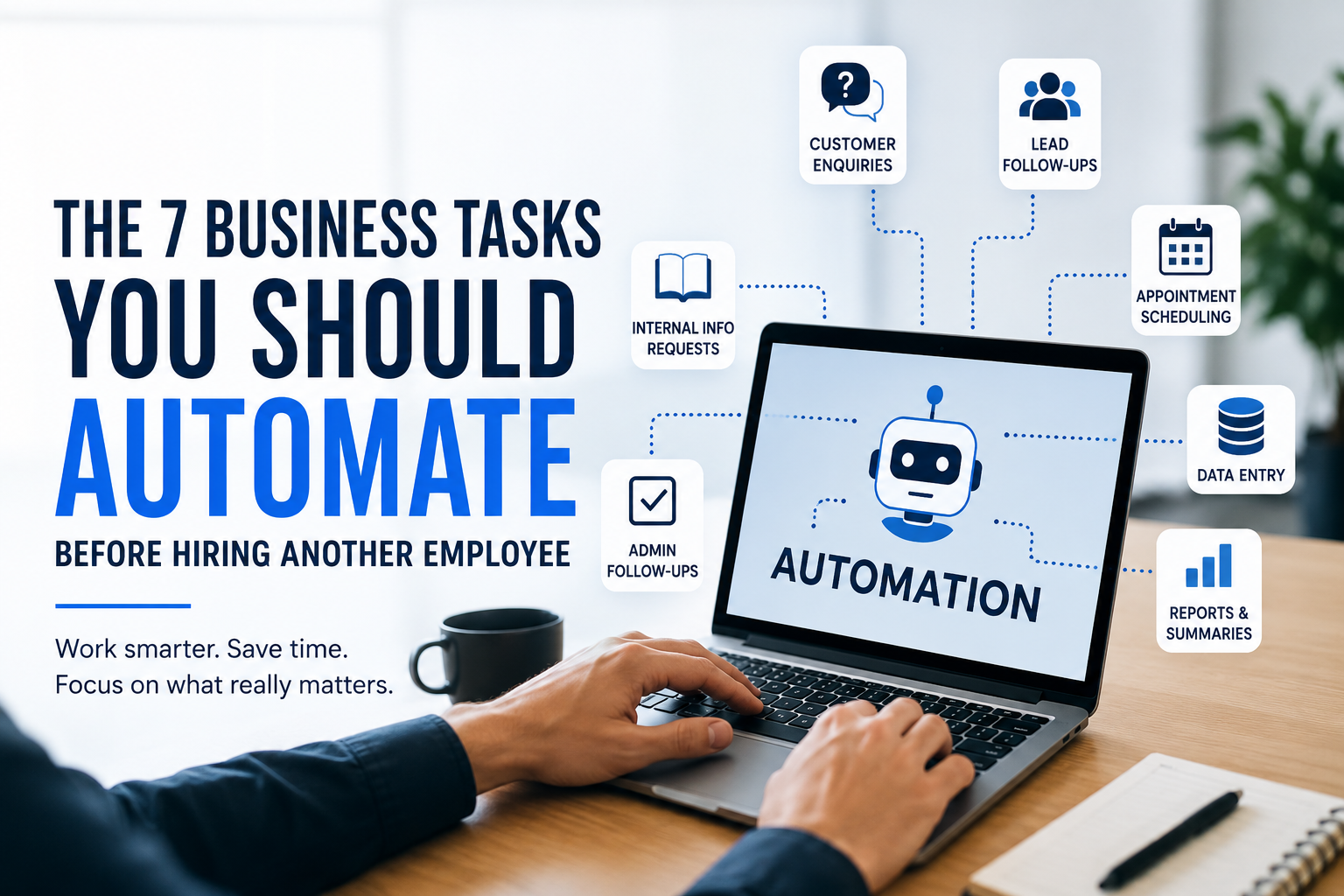
Salespeople spend significant time preparing proposals, reviewing customer information, writing follow-up messages, updating records, creating reports, and summarizing meetings.
These tasks may not generate revenue directly, but they consume valuable hours.
AI can help turn meeting notes into summaries, organize customer information, draft follow-up messages, and prepare basic reports. A salesperson can then review the work rather than starting everything from scratch.
That difference can be surprisingly important.
Saving 20 minutes on one task might not seem impressive. Saving 20 minutes across dozens of tasks every week is another story.
Smarter Pricing and Promotions
Pricing is another area where AI can influence transactions.
Businesses have to consider demand, inventory, competitors, seasonal trends, customer behavior, and other factors when deciding how much to charge or when to offer promotions.
AI systems can analyze large amounts of information much faster than a person could manually.
This can help businesses identify patterns and make more informed decisions about discounts, promotions, and inventory.
However, there is a line businesses should be careful about crossing. A pricing system should not simply ask, "How much can we charge this particular person?"
Fairness, transparency, and customer trust still matter.
A short-term increase in revenue is not worth damaging a relationship with customers who feel they have been treated unfairly.
AI Is Also Changing Transactions
The impact of AI does not stop when a customer clicks "Buy."
Behind a transaction, there can be systems checking payments, detecting unusual activity, managing inventory, predicting demand, and helping prevent fraud.
Fraud detection is particularly important for digital transactions.
AI can identify unusual patterns that may indicate suspicious activity. A purchase made from an unfamiliar location, a sudden change in spending behavior, or a series of unusual transactions can trigger additional checks.
The goal is not to make every transaction difficult.
It is to identify situations that deserve a closer look while allowing normal purchases to move quickly.
AI Can Help Predict What Customers May Need
One of the more interesting possibilities is predictive sales.
Instead of waiting for a customer to say they need something, businesses can use historical information to identify possible future needs.
For example, a company selling office equipment might notice that a particular customer typically orders supplies every few months. An AI system could help the sales team recognize when another order is likely to be needed.
This turns sales from simply reacting to customers into anticipating demand.
Of course, predictions are not guarantees.
People change their habits. Businesses close, budgets change, and unexpected events happen. AI can identify patterns, but it cannot know the future with certainty.
The Human Side of Sales Still Matters
There is a temptation to think that AI could eventually automate the entire sales process.
Maybe some transactions will become almost completely automated. But selling is not only about data.
Sometimes customers need reassurance.
Sometimes they want to negotiate.
Sometimes they have a problem that does not fit neatly into a database.
And sometimes the reason someone chooses one company over another is simply because they had a good experience with a real person.
AI can process information quickly, but trust is still something businesses have to earn.
The Best Sales Teams May Be AI-Assisted, Not AI-Replaced
The most practical future is probably not humans versus artificial intelligence.
It is humans using AI to become more effective.
A salesperson who normally spends hours researching prospects could use AI to prepare a shortlist. A customer service representative could receive an AI-generated summary before speaking with a customer. An online store could use intelligent recommendations to make product discovery easier. A finance team could use automated systems to identify suspicious transactions.
In each case, AI removes some of the heavy lifting while people remain responsible for important decisions.
That combination can be powerful.
Better Technology, Better Transactions
AI is gradually becoming part of the entire sales journey—from the first advertisement a customer sees to the recommendation that appears on a product page, the conversation with a sales assistant, the payment process, and the follow-up after a purchase.
The technology will continue to improve, but businesses should remember that more automation does not automatically mean a better customer experience.
The real opportunity is to use AI where it makes things faster, easier, and more relevant without making customers feel like they are dealing with a machine at every step.
The future of sales may not be about selling more aggressively.
It may be about understanding customers better, responding faster, reducing unnecessary friction, and giving people a smoother path from "I'm interested" to "I'll take it."
And that is where AI could have its biggest impact on sales.
 AI for Business
 AI for Business